
A narrative can extend beyond the media itself. For small creators, employing a narrative on social media is essential to build their audience.
These creators make and publish content independent of large producers. Some, like Sabrina Cotugno, work both for large producers and create their own content.
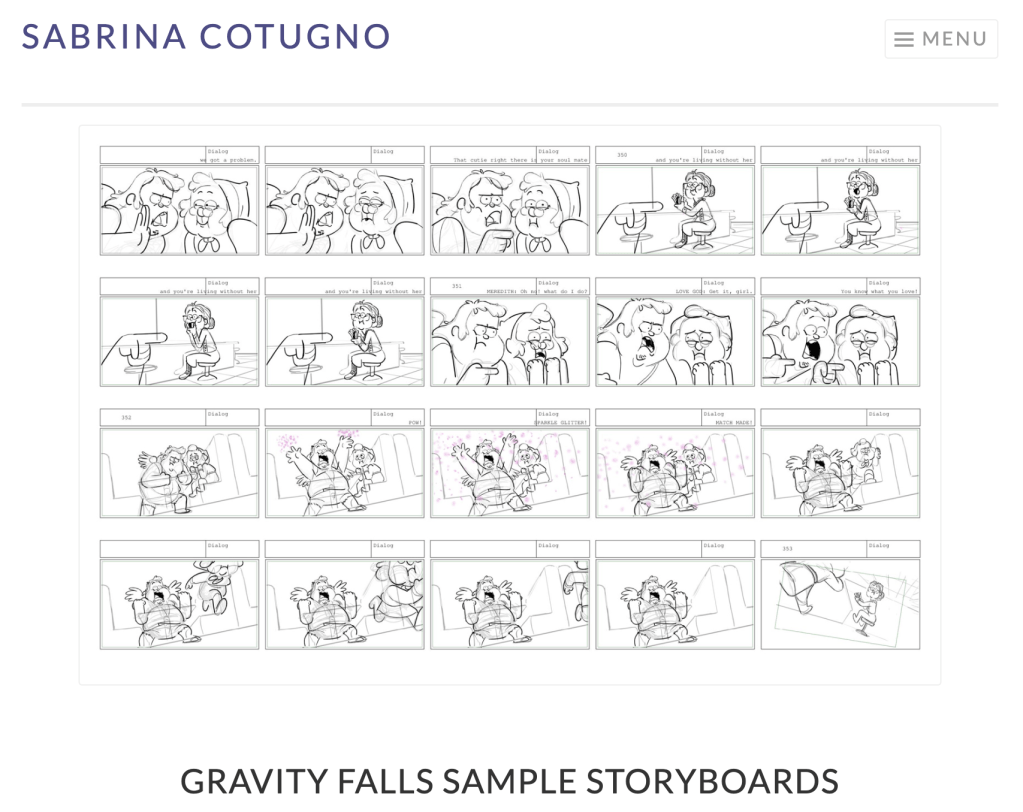
Above: A sample of Cotugno’s online portfolio. Cotugno created these thumbnails for the Disney cartoon Gravity Falls in 2014.
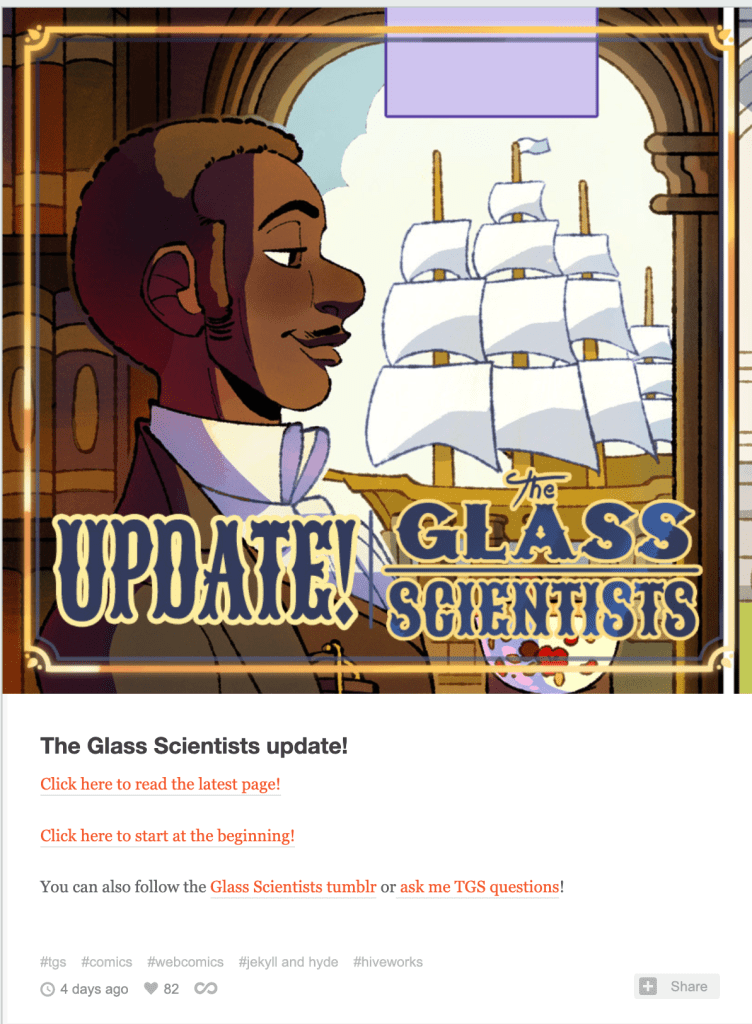
Above: A recent post from Cotugno’s Tumblr account promoting their webcomic, the Glass Scientists.
Often the narrative arises out of the creator sharing their process for developing their content. In the case of Ian Worthington, creator of short animations like Bigtop Burger, twitter is a good avenue for sharing development progress.
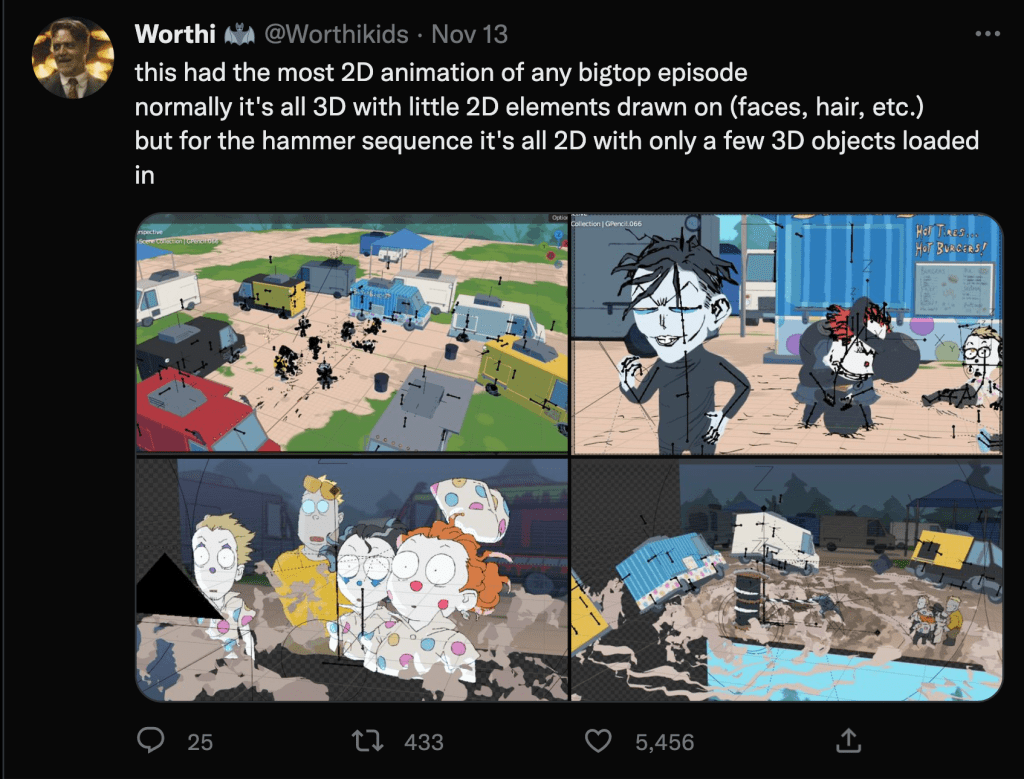
Above: Roughs for the animation created in Blender.
In Cotugno’s case, they do not use their social media to house their development process narrative. Social media helps the audience stay engaged while the development narrative is released in the description section of the webcomic with each update.
The narrative of development is important for small creators to build their personal brand. Their individuality helps attract customers, collaborators, and employers.
Personally, following a creator through their process and learning about how they think is very compelling to me. What other digital media creators have you seen that have similar engagement?
 Everything Adrian
Leave a comment