
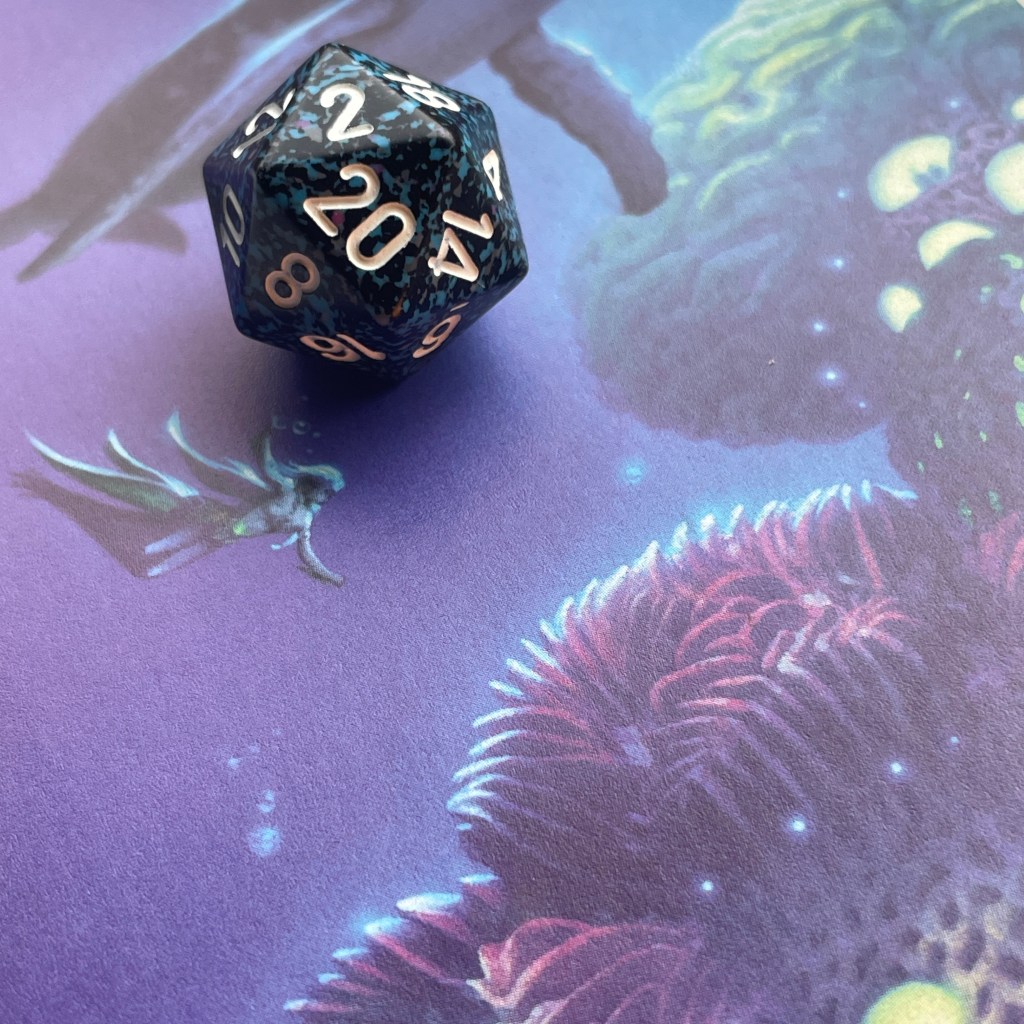
I love tabletop roleplaying games. If you were ever curious about Dungeons and Dragons, I’d encourage you to run a game for your friends!
As the Dungeon Master (shortened to DM), you’ll be narrating a scenario for your friends. Having a plan for your scenario helps you run. While many DMs write their own scenarios (called “adventures”), I recommend starting with a published adventure.
Here, I’ll show you how I read through a published adventure module for D&D. This is my thought process for preparing the game for play.
In the future I’ll show you how I prepare and run an individual play session. In that post, we will use our read-through notes to construct an outline for the play session.
The Workshop Watches
This adventure was written by Leon Barillario and appears in the Arcadia Magazine #1.
I’d recommend starting your file organization early. You should have some central folder or document that you’ll store your notes, extra material, and links to your individual session documents.
Once you have that central document open for this adventure, we’ll be ready to go!
Let’s begin!
What is this Adventure about?
When I open a new adventure, I like to read the introductory portion first, then skim the rest of the packet. Usually there will be a summary of the adventure and info that will help you understand the genre and tone of the intended experience.
So, I’m reading through the opening paragraph, Background, Story Hooks, and Motivation sections. They have some important information. The adventure is…
- designed for 4-5 characters of 5th level
- About the Player Characters (PCs) investigating a magical workshop that has gained sapience and wants to explore the outside world.
As I read, I keep track of Non-Player Characters (NPCs) that appear.
The vibe for this adventure is sort of a science fiction story, with magic instead of technology. I’m reminded of the character H.A.L. from 2001: A Space Odyssey.
At this point I know that the structure of the adventure is likely centered around playing this central NPC, the “Structure for Assistive Magic” or “SAM”, while the PCs investigate the workshop’s rooms.
NPC “SAM”
I’d like to read through pages 2 and 3 of the PDF and make careful notes about the central NPC, SAM. When I run this game I’ll need to know how to play SAM without having to reference my notes that much.
Note-Taking
Speaking of notes, You’ll need to set up a system where you can easily reference key information in session. The players shouldn’t be able to see this.
If I’m running a game in person, I have a “DM screen” (A folded piece of cardboard used as a privacy screen) that I tape notes behind.
If I’m running a game online, I usually keep physical notes on my desk and notes digitally pulled up on my computer monitor.
I would print out the “Workshop Reaction Table” and tape it up behind my DM screen, making sure to note on the table what triggers the “reactions” so I have an easier time remembering to look for the triggers during play.
DM TIP:
Keep a heading in your notes about each NPC in your game. Use it to record their motivations, stats, and critical information they know. Come back each session to update them so all your information stays consistent.
Let’s do some skimming to understand the actual structure of the adventure.
Getting the Big Picture
Here we go!
Let’s skim through the adventure and start breaking it down into chunks.
We establish character motivations first under the Story Hooks section. You should read it before character creation so you can suggest ways the PCs can connect to the events of the story, but you could easily skip this part and add in your own motivations.
For this example, I’m not preparing this adventure for any specific group of PCs.
I’ll simply narrate the exposition about why the characters are traveling together and ask them some questions about their relationships before opening a scene on the characters approaching the workshop.
DM TIP:
You have power over time and space in fiction. You can set up scenes and play them out line-by-line, second by second, or you can have an entire month go by in a single roll. Pay attention to what your players like and adjust the pace as you play.
Approaching the Workshop is brief, but I’ll need to remember to give the mountain a proper description for the characters, which would include notes on what kind of terrain is around, what time of day it is, what weather is around, and some small sensory flavor like bird calls or temperature.
Remember that as the DM, you have control over the player’s information.
If you want the players to focus on the path up the mountain and the door to the workshop, you’ll need to add more detail to those areas and less detail to other areas. Players will gravitate to those detailed places if not otherwise motivated.
I would screenshot and print out the section of Workshop Features and put them inside my DM screen. This section contains details about the workshop’s interiors that I’ll need to constantly reference, like the dimensions of the rooms and visibility.
That was all the general setup for now. Let’s look next at the main body of the adventure.
The Workshop Areas
Adventures like these are organized around a map with numbered areas. You’ll notice that starting on page 4 of the PDF you’ll see headings with numbers that correspond to sections of the map on page 10. I’ll be glancing at that map and imagining the rooms as I skim.
Under these headings you’ll find the descriptions of the area, what NPCs are present, and several potential interactions the players may have with the props in the area.
For example: If there’s a locked box, the text will tell you what kind of check is needed to bypass the lock.
Developments
You’ll notice the occasional “Development” heading among the room descriptions.
Often there are events happening in the background of an adventure, propelled by off-camera NPCs. These “Development” headings and similar notes will describe them.
In our case, The “Developments” are about SAM’s reactions to different things in the room. I will note these reactions under my notes for SAM, making sure to note exactly when they are relevant. This will help me remember to deploy the developments at the right times.
DM TIP:
Often you’ll see boxed-off text in the room descriptions. This “box text” is there for the DM to read aloud to their players. It is very useful if you intend to run the adventure without many modifications.
The room descriptions start on page 4 of the PDF and stop at page 7.
The Conclusion
Most of the prep you’ll be doing is writing lots of “if” statements. “If” the players do this, “then” that will happen.
Keep track of these “if”s and “thens” in your notes.
DM TIP:
If your players do something that you didn’t expect and take a path away from your prepared content, let it happen! You can always put that preparation back “in your pocket” and pull it out in another session with some extra touch-ups.
Printouts
On page 8 there are pictures of handwritten notes. These are materials intended for the DM to show to the players, likely clues they’ll pick up while searching some of the rooms of the workshop.
These are optional but very fun! I would screenshot these and put them in a file folder with the rest of my prep documents.
- If I were to run in person I would print them out,
- If I was running for a digital group I would make the handouts into low or medium resolution JPEGs using a photo editing software and then send them to a Notes channel in the discord server we are calling from when the players find them.
Stat Blocks
Most published adventures will have a mix of unique NPC stat blocks and stats from the Basic Rules or the Monster Manual.
The stat blocks will usually be at the back of the book, or in the section where the corresponding monster is found.
I don’t usually make notes on stat blocks until I’m ready to start prepping a specific session, but reading through them is still useful because the best ones usually convey a lot of personality and can inspire me!
In this case, “The Workshop Watches” has only one unique stat block, for SAM’s Shield Guardian form. The Mimic, Flying Swords, Animated Armor, and the rest of the monsters here can probably be found in the Basic Rules.
DM TIP:
You can find most monster stat blocks from a quick google search! This goes for magic items and spells as well.
Read-Through Complete!
Congrats! You’ve now read through a D&D adventure module and have some good notes organized.
Next time I’ll talk about your first session running this adventure. I’ll show you how much prep you’ll reasonably need and give you plenty of tips about the process.
Running the game is very different from prep, but every bit of prep helps you run the game. You’ll see!
DM TIP:
Prep is valuable but won’t guarantee a good session! You can always call for a snack and bathroom break during the session to organize your notes or develop more content.
More Resources
Prep Can Be Literally Easy and Actually Fun
The video above is by Matt Coville, a seasoned writer for video games and tabletop games. He encourages new players to run D&D and has many videos on specific situations, including examples from his experiences as a DM. If anything he’ll get you thinking more about running the game, which is often all that you need!
’till next time!
 Everything Adrian
Leave a comment